Choose a state
Plumbing (2026-04-23)
Unlimited commercial and residential plumbing NOT including fuel gas or boiler systems.
# of questions - 70
% required to pass - 70
Time allowed - 3 hours
The reference material listed below was used to prepare the questions for this examination. The examination may also contain questions based on trade knowledge or general industry practices. Except for Code books, you can base your answers on later editions of references as they become available. For Code questions, the examinations will be based only on the edition of the Code book that is listed.
 Click Here to View the Candidate Information Bulletin
Open Book These books are allowed while taking your test.
Closed Book These books are for pre-test study only and are not available for use during the test.
In Stock These books are currently in stock.
Out of Stock These books are currently out of stock.
Closed Book These books are for pre-test study only and are not available for use during the test.
In Stock These books are currently in stock.
Out of Stock These books are currently out of stock.
-
-
Open Book In Stock
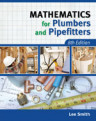
Mathematics for Plumbers and Pipefitters 8th Edition
8th Edition
$210.00
Fully updated for optimal learning, Mathematics for Plumbers and Pipe-fitters, 8E remains a trusted resource for essential math concepts in the plumbing and pipe-fitting trades. With an emphasis on real-world examples that will prepare readers to successfully transfer their knowledge to on-the-job situations, this book utilizes the most currently used fitting materials to demonstrate key concepts. Simplified, clear explanations and a straightforward approach, combined with new units on changes of state, pressure and heat, and mechanical advantage, make this an ideal tool for anyone entering the field.
-
Open Book In Stock
International Plumbing Code Turbo Tabs 2021
$15.63
Flip through the 2021 IPC and find frequently used sections fast! You'll be surprised how easy it is to find what you are looking for. These tabs were created by industry experts who carefully identified the most referenced sections in the code.
Loose Leaf Tabs Contain: Full-page inserts tabs that have the key code sections printed on them in an easy-to-read format.
Soft Cover Tabs Contain: Clear plastic, self-adhesive tabs that have the key sections of the code printed on them in an easy-to-read format.
-
Open Book In Stock
International Plumbing Code 2021
Publication Year: 2021
$100.00
The IPC provides minimum regulations for plumbing facilities and provides for the acceptance of new and innovative products, materials, and systems. In October 2019, the Code Council released an independent study comparing model plumbing codes. It found that over a 12-year period, counties using the IPC saved $38 billion in construction costs, emitted 1,000,000 fewer tons of carbon dioxide, saw an additional 166,000 jobs, and saved 880 million feet of pipe. On average, a single-family home could save up to $4,000 in labor, materials and overhead compared to that same home built to other codes. To learn more about the IPC’s impact on construction, the economy and the environment, read the full report at www.iccsafe.org/IPC.
Important changes in the 2021 IPC include:
Multiple-user toilet facilities to serve all genders are now permitted.
Two new methods for relining/rehabilitation of existing sewers are added.
Accommodations for mounted roof top solar panels over vent terminals is added.
CSA B805/ICC 805 Rainwater Harvesting Systems is allowed as an alternative design method.
Plumbing provisions from ICC A117.1-2017 Standard for Usable and Accessible Buildings and Facilities are now included. -
Open Book In Stock
Code of Federal Regulations, 29 CFR Part 1926 (OSHA) 2026
Publication Year: 2026
$37.00
Our OSHA 29 CFR 1926 Construction Regulations book gives you quick, easy access to essential safety guidance whenever you need it. It helps employers and workers identify hazards fast and stay compliant on any jobsite. The 2026 edition features a clear two-color layout, includes all 1926 regulations along with key 1903, 1904, and select 1910 rules, and highlights any regulation changes between editions. Icons make it simple to find OSHA interpretations, and the book also includes OSHA Form 300, the Cancer Policy, and In-Cite references to 1910 standards. Frequently cited standards are placed before their related subparts for even easier navigation.